If you've started looking into alternatives to a traditional classroom, you've probably come across the term "micro school." It's a simple idea with a lot of variation behind it, so it's worth understanding what actually makes a school a micro school — and whether one might be the right fit for your child.
The short version
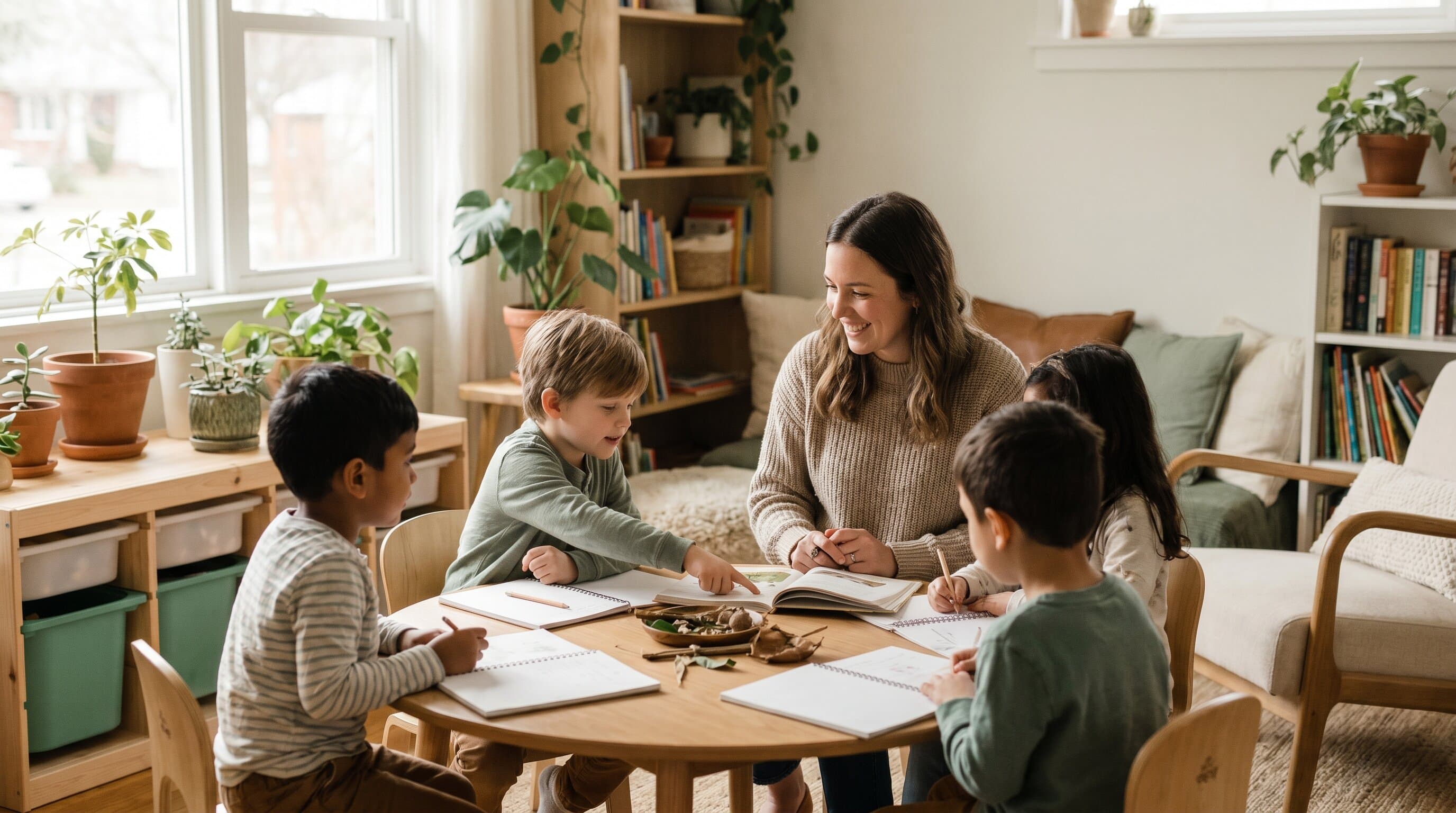
A micro school is a small learning community, usually somewhere between five and fifteen students, though some are a little larger. Think of it as a modern, intentionally small school: fewer students, closer relationships, and a lot more flexibility than a conventional classroom of thirty.
Micro schools go by a few different names — you might hear them called learning pods, one-room schoolhouses reimagined, or micro-academies — but the heart of the idea is the same. Keep the group small, know every child well, and build learning around them.
What sets them apart
Micro schools tend to share a handful of traits, even when they look very different from one another:
Small, often mixed-age groups. Because the numbers are low, students of different ages frequently learn together, a bit like siblings do at home. Older students reinforce what they know by helping younger ones, and younger students stretch toward what's ahead.
A personalized pace. With only a handful of students, a teacher can actually meet each child where they are — moving faster where a student is thriving and slowing down where they need more time. That's hard to do in a room of thirty.
Hands-on, real-world learning. Many micro schools lean into project-based and experiential learning: field trips, building things, exploring the community, and connecting lessons to the world outside the walls.
A strong sense of community. When a school is small, it becomes a tight community. Students, teachers, and families tend to know each other well, which many parents say is one of the biggest differences they notice.
How they're different from homeschooling or traditional school
Micro schools sit somewhere in the middle. Compared to a traditional school, they're far smaller and more flexible, with more individual attention. Compared to homeschooling, they give your child a consistent group of peers, a dedicated teacher or guide, and structure — without you having to run the whole thing yourself.
For a lot of families, that middle ground is exactly the appeal: the personal attention of homeschooling with the community and structure of a school.
The different formats
Micro schools aren't one-size-fits-all. You'll generally find three formats:
- In-person — students meet together in a physical space, whether that's a dedicated building, a home, or a shared community location.
- Hybrid — a mix of in-person days and learning done at home or online.
- Online — students connect virtually, often in small live groups.
The right format usually comes down to your family's schedule, your child's learning style, and what's available near you.
Who micro schools are for
There's no single type of family that chooses a micro school. Some are looking for smaller class sizes and more attention. Some want a particular approach to learning — hands-on, faith-based, nature-focused, or something else. Some have a child who simply got lost in a larger classroom and needed to be truly seen. What they tend to have in common is a desire for something more personal.
Finding the right fit
The best way to understand a micro school is to visit one, talk to the people who run it, and see how your child responds. Every micro school has its own personality, and what makes one family fall in love might not be the right match for another — and that's okay. The goal is to find the place where your child feels known and can thrive.
That's exactly what this directory is here to help you do. Browse micro schools in your area, read what other families have to say, and start finding the environment that fits your child best.